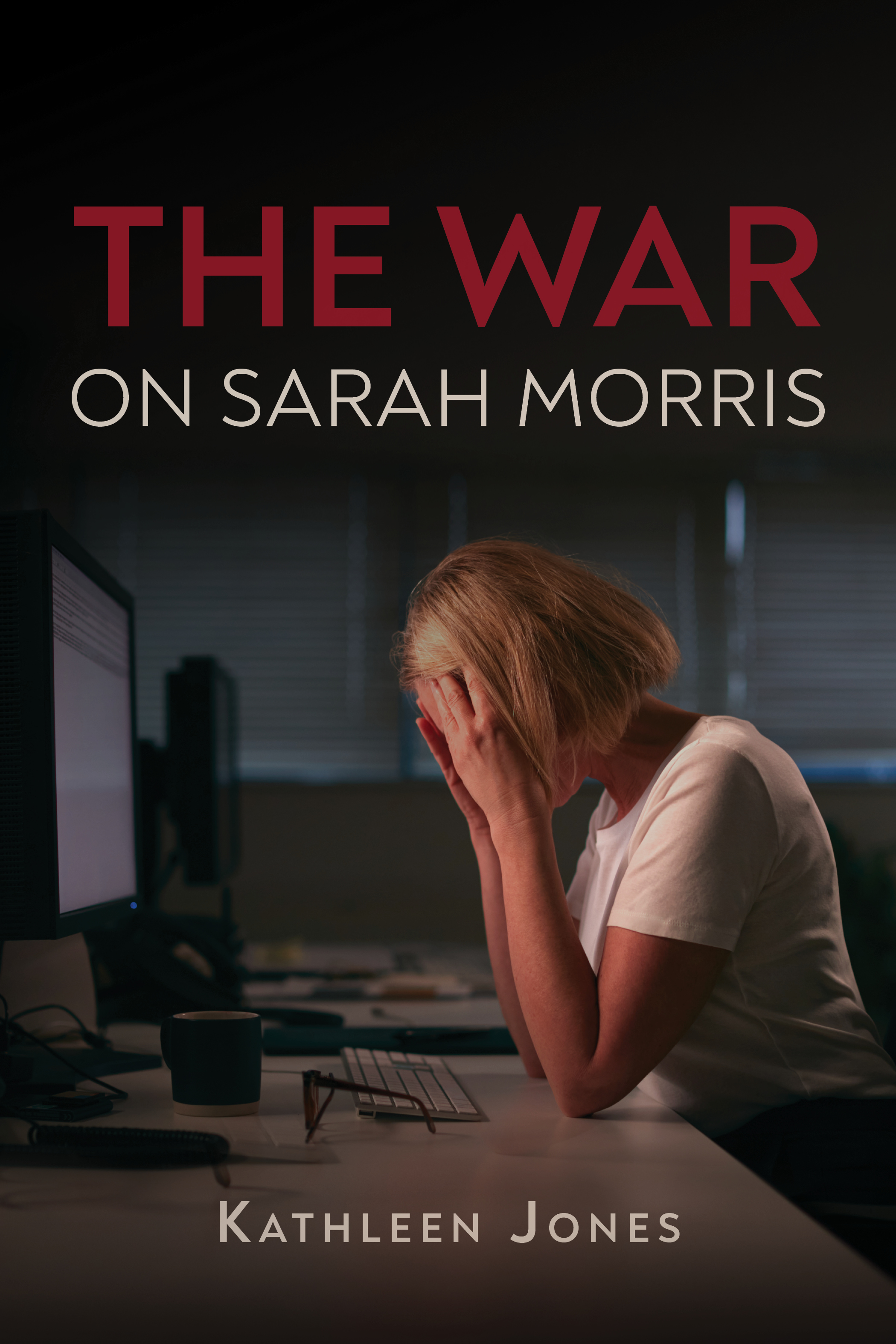
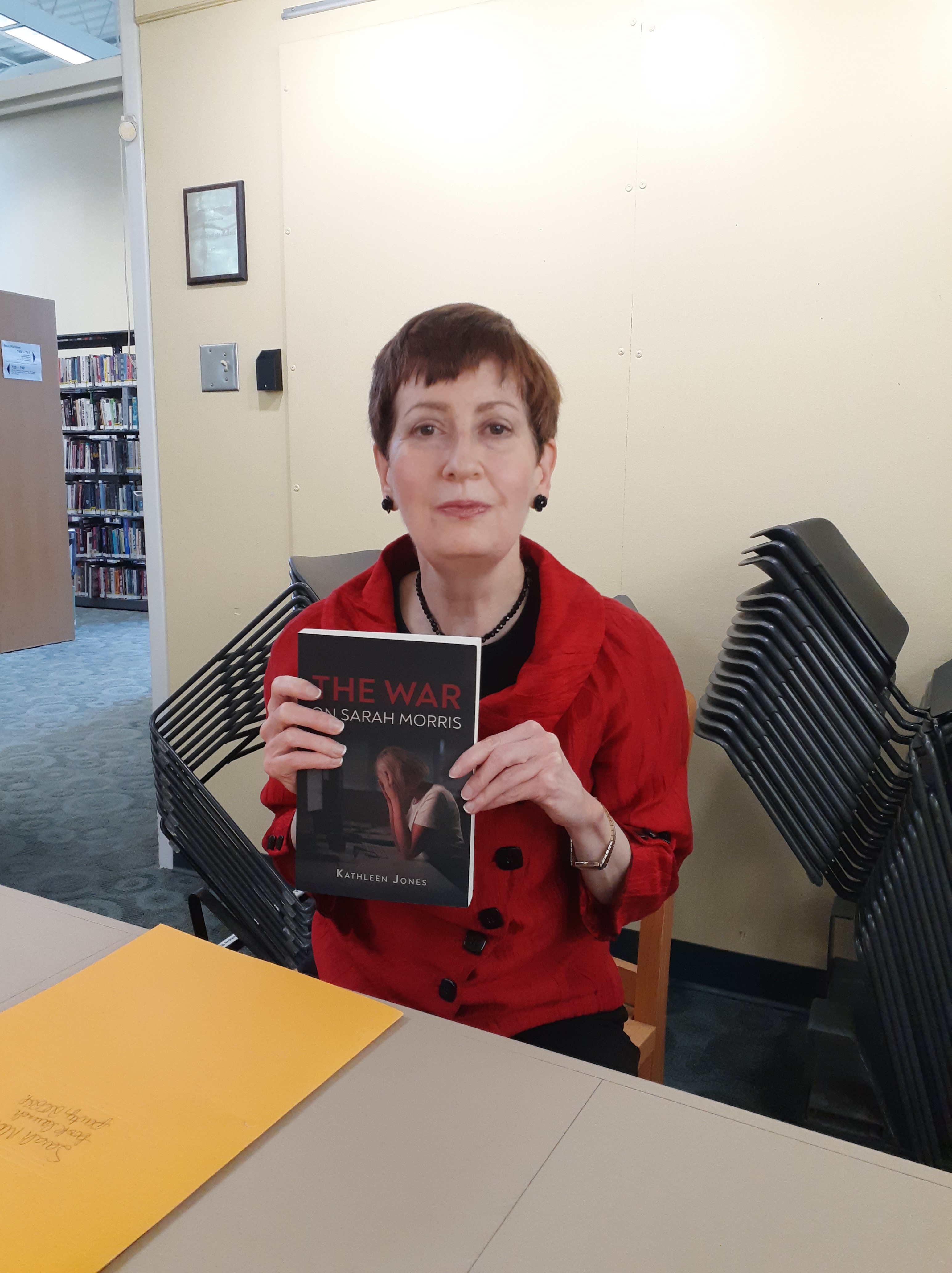
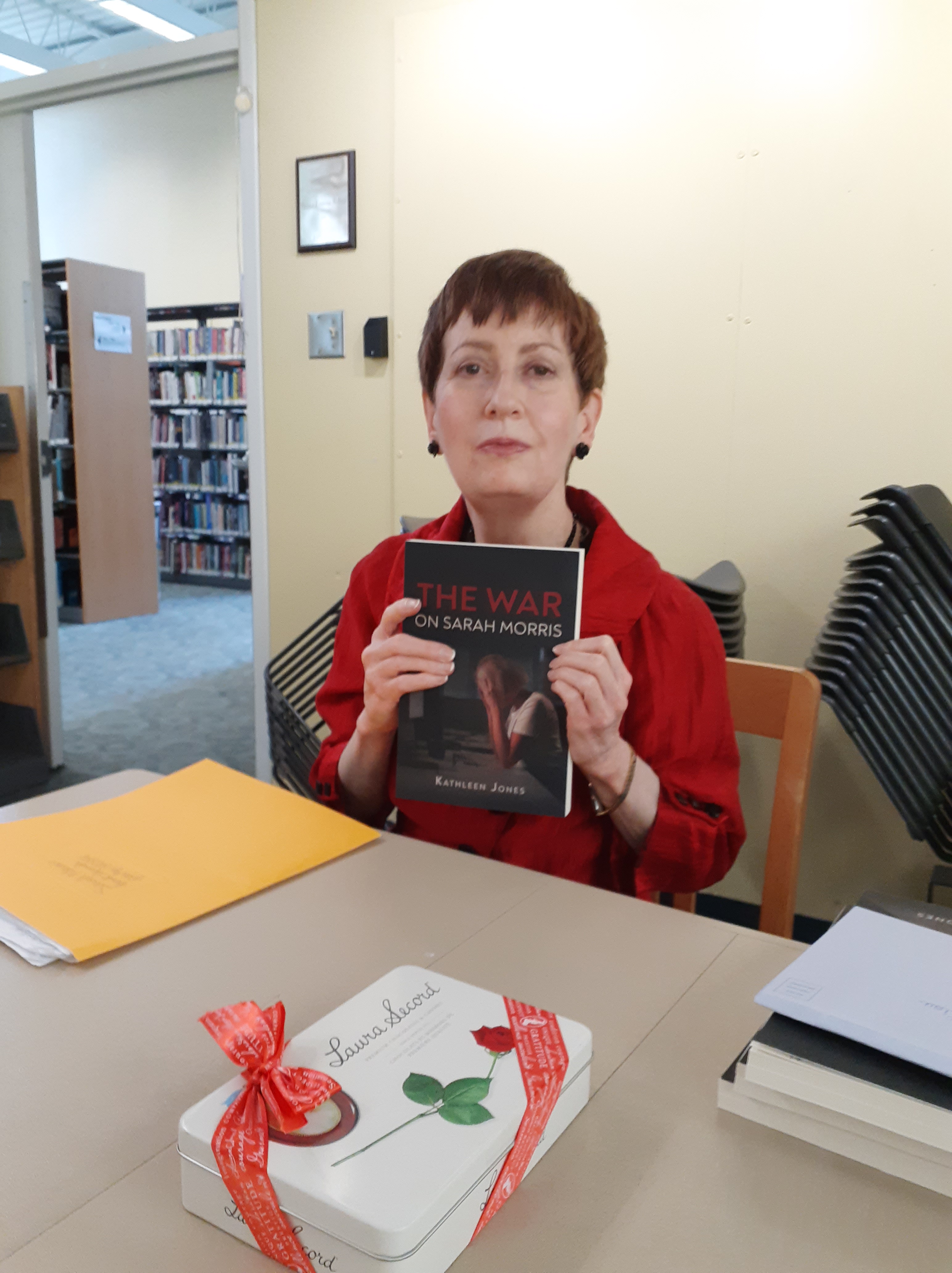
Kathleen (whose pen name is Kathleen Jones), a former book editor, is enjoying a successful second career as a novelist. Since she retired eight years ago, she has published two novels with two U.S. publishers. Her current novel, published by Legacy Book Press, is The War on Sarah Morris, about a middle-aged book editor who is struggling to hang onto her job in a bad economy.
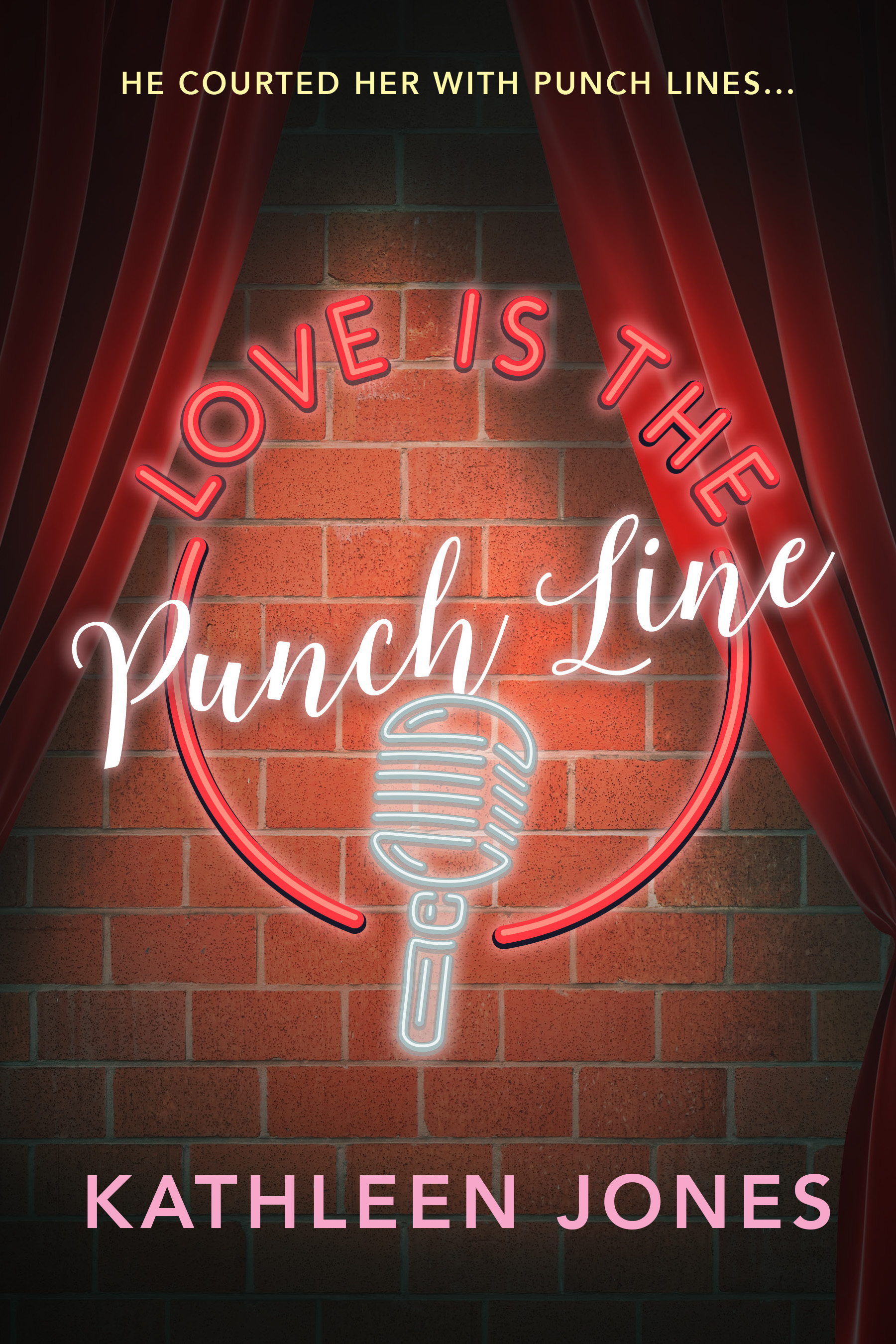
I’m giving away 1 copy of my ebook #LoveIsthePunchLine and a $25 Amazon gift card. Just like and retweet for your chance to win. I’ll be contacting the winner on 2/15/25. CANADIAN AND U.S. RESIDENTS ONLY.
Kathleen Jones writes a true to life tale with The War on Sarah Morris
In The War on Sarah Morris, the reader is introduced to Sarah Morris, the titular character. She’s an editor that has been working for years at this prominent publishing company, and then, it strikes. I am a fan of Kathleen Jones and want read whatever this author writes. This author has a grand imagination, and talent for showing the story. One minute you’re a devoted employee, and the next minute, you’re reassigned, essentially demoted. Anyone who has ever been in this position, can understand what Sarah is going through, and how sometimes you just give up and give in because you need the paycheck. It’s either demotion or head out the door, willingly or not. Sarah discovers what is actually happening, and how a freelancer is doing her job, and now, all she is doing is tagging books. Of course, the company is cutting back, but as many do, they do not look at the loyal employees, they look at their salary and where they cut costs. They look for people who will not fight back, however, Sarah, though she seems like the world is against her, pushing her into a corner she doesn’t like, they are not prepared for Sarah’s strength and gumption. Sarah is a very relatable character, and her new nemesis, is just a typical person, also wanting to get recognition and the paycheck. The new favorite employee is only there until the next favorite employee. Kathleen Jones not only tells the story but shows it with words as well. It’s a great story to follow and try to figure out what will happen next. The characters are so real, it’s like being with them within the story. The War on Sarah Morris is a definite recommendation by Amy’s Bookshelf Reviews. I read this book to give my unbiased and honest review. Amy’s Bookshelf Reviews recommends that anyone who reads this book also write a review.
#Fiction #Drama #ABSR #storytelling #reviews
About the Book:
ONE DAY, YOU’RE A VALUED EMPLOYEE OF THE COMPANY … THE NEXT DAY, YOU’RE BEING PUSHED OUT THE DOOR.
What happens when your secure corporate job suddenly becomes precarious? Book editor Sarah Morris finds herself in this predicament when the company she has served for twenty-one years is reorganized. Sarah’s boss gives all the company’s book editing projects to freelancers and a pet employee, unofficially demoting Sarah, who must spend her days tagging documents. And when Sarah’s boss starts bullying her, she realizes that she’s been pigeonholed into a dead-end job.
Review posted by Glenn Perrett on Metroland Media’s 20 plus news sites on October 29, 2024.
The War on Sarah Morris” is a sobering look at how many corporate jobs have changed.
By Legacy Book Press photo
Kathleen Jones
Legacy Book Press
2024, 237 pages
ISBN: 9798987482346
Sarah Morris is a middle-aged, experienced editor for the book publisher Quill Pen Press and she has been for more than 20 years. When her company is reorganized in an attempt to deal with a poor economy, Sarah’s job changes considerably. While she still has her job title and salary, she no longer edits books. That rewarding, satisfying responsibility has been given mostly to freelance editors.
For Sarah, losing her editing work is a big blow, but it is made even worse when her former editing responsibilities are replaced with “mind-numbing work” — and lots of it. In fact, Sarah is now doing the work of three people and she is not paid for the considerable overtime she has to do to meet her unreasonable workload.
Having her reasonable amount of satisfying work replaced by an unreasonable amount of boring, tedious assignments is not Sarah’s only problem. Sarah’s bosses are now bullying her. And the terrible treatment that she receives is not unique to her situation as older, loyal colleagues are losing their jobs to younger, less expensive employees. And this is also happening throughout the corporate world making getting a new job for an older, experienced person very difficult. Outsourcing work to freelancers who aren’t provided with pensions, dental plans and other benefits is another corporate strategy to increase revenue.
“The War on Sarah Morris” is not only a sobering look at how many corporate jobs have changed — and not for the better — but it is also an entertaining novel where you find yourself cheering for Sarah whose career has been decimated by corporate greed and bullies disguised as managers.
“The War on Sarah Morris” is a thought-provoking and an ultimately hopeful novel that I recommend.
“The War on Sarah Morris” is a fictional satire about a dystopian workplace named Quill Pen Press and the effect it has on Sarah Morris, a woman in her 50s. Imagine what a bad employer might look like, multiply that by 10x, and you’ll get Quill Pen Press.
“The War on Sarah Morris” is not always a pretty novel to read. It’s rather bleak. I feel that my empathy skills have improved after reading the novel, because I felt Sarah Morris’ pain. I feel that this novel is a page-turner, because I wanted to know how it ends.
The novel provides a great springboard for a philosophical discussion. I found myself wondering about the following questions: -Why do we work? -In what ways do you identify with Sarah Morris? -What would you do differently than Sarah Morris? -How could companies do better?
“The War on Sarah Morris” is a thought-provoking and an ultimately hopeful novel that I recommend.
Effective October 4, 2010, the roles of Sarah Morris, Caleb Elliott, and Ramona Duvall will be changing…
Bullshit! This company isn’t “changing the roles” of Caleb, Ramona, and me; it’s taking our roles away, destroying our livelihoods, our very careers. It’s taking away the work we were hired to do—editing authors’ manuscripts, turning them into polished books—and farming it out to freelancers, a nameless and faceless army with no connection or loyalty to this company. Thanks a lot.
I stare at the email on my computer screen, my mind suddenly flooded with questions.
Why on earth did the company do this to me? Maybe it’s my age. I’m forty-nine, practically a wizened old geezer as far as the business world is concerned. Or maybe I’ve just been at this company too long—twenty-one years, to be exact—and they’re sick to death of me. Or maybe the reason is a lot more personal; my boss, Gillian, has never really liked me. And nine years of slaving under her dictatorship, swallowing her mean-spirited comments while trying, over and over and over again, to please her, haven’t changed her mind, not one iota.
Hmm, do I still even have a job at all? I scan the email, trying hard not to panic. Oh, yes, it looks like I do: Caleb, Ramona, and I will be “processing” documents. Meanwhile, the two women who have been doing all the “processing” for our department will be leaving the company next Friday “to pursue exciting new opportunities.” Exciting new opportunities? On this planet? The last time I watched the news, millions of people were pounding the pavement, looking for work. And Quill Pen Press will save a ton of money once these employees have been kicked out of their jobs and their work has been dumped on Caleb, Ramona, and me.
I want to bash my fist through the screen, strangle the smug words in front of me.
…job titles will not be changing…
Translation: We get to keep our now-empty job titles. From now on, the three of us will be called “editors,” but we will no longer be real editors, just glorified data entry clerks with a fancy name. From now on, the three of us will be spending our days doing hours and hours of mindless, soul-sucking drudgery, pulling data off the Internet, formatting it into documents, tagging the documents. The ugly truth is, we’re being demoted, demoted by a cowardly and sneaky company that doesn’t have the guts to tell us what’s really going on. A company that no longer allows us to edit books, a company that no longer values our minds, our skills, our ideas, our knowledge. A company that no longer allows us to think at work. A company that no longer gives a shit about us.
Right now, I feel so hurt and angry and betrayed, I want to scream.
Farther down, toward the bottom of the screen, the news gets even worse:
Derek Witowsky will continue in his role as Manuscript Editor, working with authors…
Translation: Derek and the nameless and faceless freelance editors will be the only people who will be allowed to edit books at Quill Pen Press.
Of course Derek will continue in his role. He was always “smarter” than the rest of us editors, never failing to point out our mistakes to Gillian (even though we were too polite to point out his), forcing his way of doing things on us (even though the way we had been doing things worked perfectly well), shooting down our ideas at department meetings. Derek has always been the boss’s “pet.” She wouldn’t dream of demoting someone as wonderful as him.
Gillian Martin will continue in her role as Head of Editorial.
Of course she will. Gillian has always been brilliant at promoting her own selfish interests. A political animal through and through, she’s a whiz at bullying subordinates, quick to point out their tiniest, most insignificant errors while withholding praise for outstanding work. Unless, of course, the subordinate’s name happens to be Derek Witowsky, in which case the rules are entirely different. Obviously, Gillian—who had considerable input into the decisions behind this email, collaborating with the other managers in an endless string of meetings behind closed doors—cast the three unlucky editors working for her aside to protect her own job and the career of her precious mentee. And it’s obvious that Gillian didn’t think my own career was worth protecting.
All employees are invited to an Information Session in the boardroom at 10:00 a.m. today. We will explain our new corporate strategy and answer your questions. Coffee and donuts will be served.
Coffee and donuts? Big deal. I glance at my watch. It’s almost 10:00 now. Around me, dozens of employees, their faces full of worry and fear, their loud voices blending into dozens of conversations, are spilling into the hallway, anxiously awaiting their fate in the boardroom. Screw it. I’m not going.
Sighing, I turn back to the computer screen, glowing coldly and harshly at me, and start to close the CEO’s email. Then a string of words—somehow I missed them—leaps out at me from the first paragraph:
Quill Pen Press will be transitioning to meet the more challenging marketplace of the 21st century…
Translation: The company is making these drastic changes because it’s losing a lot of money in this economy, a horrible economy full of unemployed people struggling to stay afloat. And unemployed people who are struggling can’t afford the luxury of snapping up the latest novels, biographies, how-to books, or anything else this company publishes.
I pause, my hand still clutching the mouse, take a deep breath, and try to calm down. I still have a job. And I’m taking this way too personally. What’s happening to me is also happening to some of my coworkers. It’s all about money: the worldwide economy is in the toilet, and the company is trying to stay afloat. It has to lay off staff and reassign the work to the remaining employees just to survive.
I loosen my grip on the mouse and look away from the computer screen, trying to blink the blurriness out of my eyes. By now, the office has emptied out, save for a few stragglers. I should join them, rush down to the info session.
But I don’t. I can’t. I have to find out what’s really going on. I have to speak to Gillian. Now.
I head down the hall toward Gillian’s office, knowing that she rarely bothers to show up at these boring info things, so there’s a very good chance I’ll find her there.
Her office door is closed, thank God. But my heart starts to pound.
I just have to calm down. And there’s no reason to be scared. The volume of short stories I edited a few months ago is selling well; it’s even earned several five-star reviews on Amazon. Gillian seems to be happy with my work; not long ago, she gave me a glowing performance review. Okay, she did keep Derek in a cushy job, but maybe that’s just common, subconscious, garden-variety sexism on her part.
My heart stops pounding. I knock softly on the door.
No answer.
Before I can knock again, the door flies open. There she is, tall, big-boned, plumpish, and mid-forty-ish, dressed in a flamboyant royal purple wrap dress, glaring down at me with her brilliant blue eyes.
Suddenly, I feel underdressed in my black 1940s wool crepe peplum jacket and knee-length camel wool flannel pencil skirt, my brown hair styled in a boring, chin-length bob.
Brushing her dark, glossy, shoulder-length hair away from her face, she rasps, “There’s an important information session in the boardroom right now.”
“I know,” I begin in a shaky voice as I try to pick out the right words. “I have to talk—”
“You must take these meetings a lot more seriously, Sarah. It’s your job to go to them.”
If these meetings are so “important,” then why aren’t you at this meeting, Gillian?
“Why did you demote me, Gillian? Why?”
Oh, my God, I said it! I actually said it! No lame attempt at small talk, just a bald, angry accusation.
Gillian is speechless. For a moment, she stares at me with a blank expression. Then she beckons me into her office and shuts the door.
She sinks down on the thick, luxurious black leather recliner behind her gigantic desk, cluttered with paper, books, manuscripts, paperclips, and other flotsam and jetsam, and I seat myself on the smaller, less comfortable chair opposite her.
“Look,” she begins in a calm voice, “you weren’t demoted. You have the same salary, the same job title.”
The same job title but not the same job.
“Then why can’t I do the work of a real editor anymore? Why do I have to spend all my time on tagging documents, on cutting and pasting data? That’s not editing, Gillian. It’s data entry work.”
Gillian sighs, exasperated. “Is that why you’re not at the info session?” She furrows her brow. “Look, this wasn’t my idea.”
“But didn’t you have some input?” No answer. “Weren’t you happy with my job performance? Did I do something wrong? Please tell me.”
“I would have told you if you had done something wrong,” Gillian responds, shaking her head. “Besides, I gave you a really good performance review just a month ago. Don’t you remember?”
She gave me a fabulous review! Maybe she had nothing to do with my demotion. Still…something doesn’t quite add up.
“You didn’t change Derek’s job,” I blurt out, deliberately brushing off her words.
“I had to keep somebody.” Gillian’s voice is rougher, spiked by impatience. “The company hasn’t been doing well since the recession started a couple of years ago, and it needed to reorganize. That’s why your job—why some employees’ jobs—were changed.”
“But how does the company save money by taking my responsibilities away, Gillian? They still have to pay freelancers to do the work.”
Gillian pauses. It’s obvious that she has run out of answers. “I don’t know, to tell you the truth,” she mutters.
She doesn’t know? Is she saying that she had nothing to do with the decision to demote me?
“Is there any chance I could move back into my old job if the company starts making money again?” I probably could. After all, Gillian was happy with my work in the past.
She sighs. “Why don’t you give this new job a chance? You might end up liking it.”
Translation: If you try out this new job and like it, great…
“And you’re welcome to drop by any time to chat,” she smiles. “My door is always open.”
Translation: …but if you don’t like your new job, you can discuss it with me.
And maybe I can talk her into giving me my old job back. “Okay, Gillian,” I reply, returning her smile. “I’ll give it a try.” I rise from the chair, tension draining from my chest, and stroll out of the office, gently closing the door behind me.
Looks like I was wrong about Gillian. She really does care about me, after all; she even invited me to drop in on her whenever I want to. And if I’m not happy with my new job, I’ll just speak to her.
I return to my desk—now surrounded by a sea of empty desks— sit down and reach into my blue nylon bag for something to eat. It’s empty, except for a stale-looking apple, its skin a faded red covered in brown specks. I bite into it anyway.
Okay, maybe Gillian will help me, maybe she won’t. Either way, I won’t be stuck in this new job forever. This recession will be over with by next year. And once the economy picks up and Quill Pen starts making money again, I might be able to return to my old job. If not, I’ll look for something else. I just have to hang in there.
Want to read more? Purchase your copy of The War on Sarah Morris. Available in paperback and ebook from:


 Kathleen Jones, The Quirky Novelist